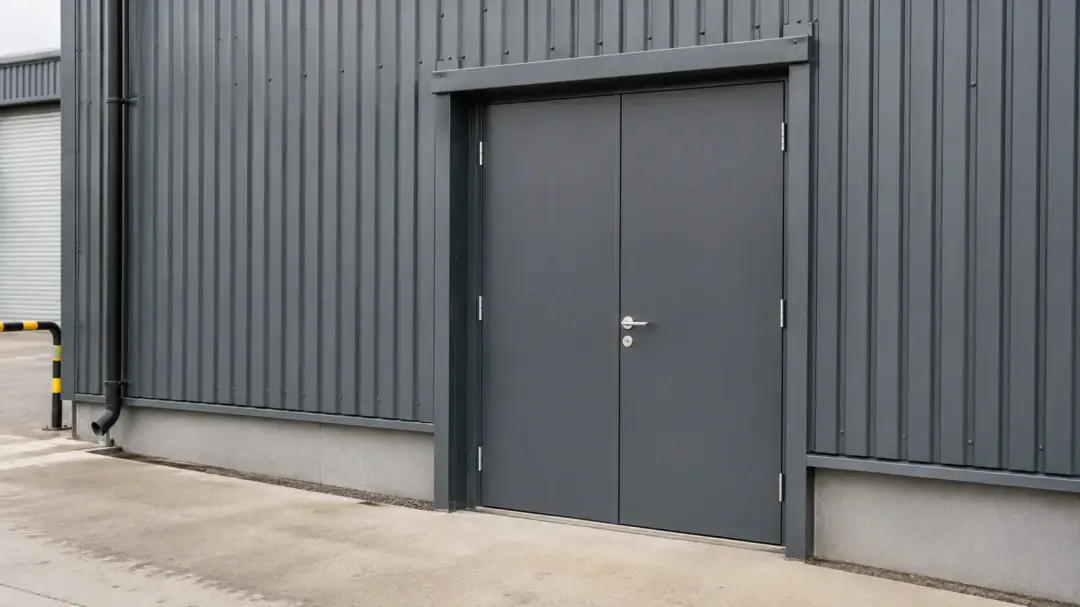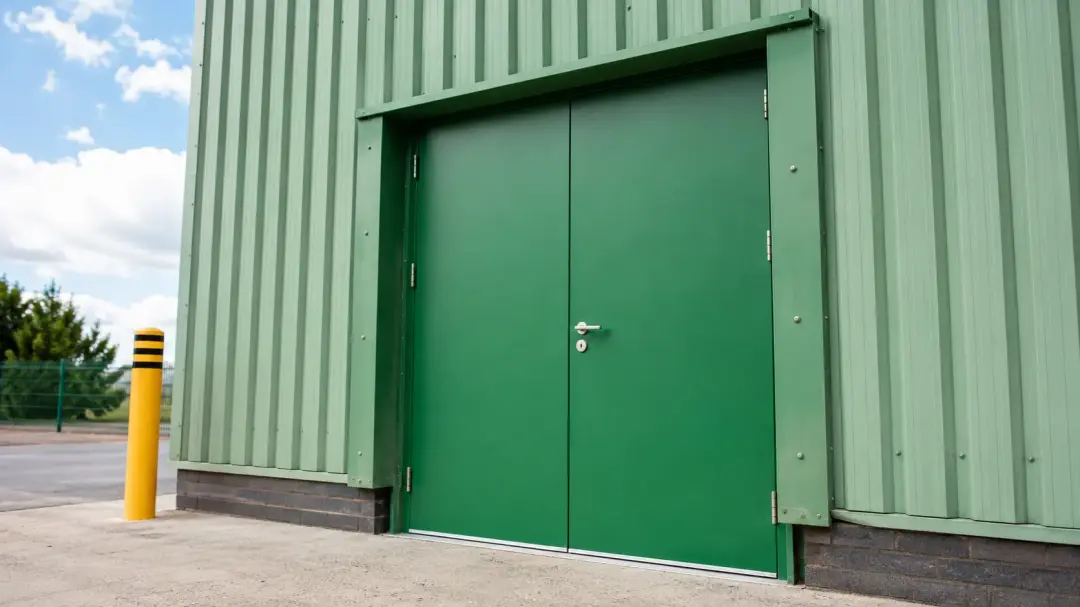
Steel pedestrian door security in Shrewsbury
The security features of steel pedestrian doors work as a system. The leaf resists attack, the frame transfers loads into the building, and the lock and hinges keep the assembly engaged. A substantial-looking steel panel alone does not establish how secure an entrance will be. For premises in Shrewsbury, assess the particular doorway and request evidence for the complete doorset.
This guide explains the details worth checking when comparing specifications. The aim is to select an entrance that protects the premises while remaining practical for authorised users and compatible with any escape function.
What the latest burglary figures tell us
The Office for National Statistics reported 222,304 police-recorded burglary offences in England and Wales in the year ending June 2026, down 6% on the previous year. This combines residential and non-residential burglary; it is not a count of commercial break-ins or a measure of local risk. Source: ONS, released 22 October 2026.
Use national statistics as context, then assess the entrance itself. Consider whether it is overlooked, what is stored behind it, when staff are present and how an alarm would receive a response. Those factors help establish the required protection without turning a national total into a product-performance claim.
Check the leaf, frame and supporting wall
A steel leaf can incorporate internal reinforcement and strengthened zones around locking and hinge positions. Thickness is only one detail: folds, internal construction and edge design also influence the assembly. Ask what construction has been tested rather than comparing sheet thickness alone.
The frame needs support and fixings suitable for the surrounding structure. Brickwork, concrete, steelwork and lightweight cladding present different conditions. An installer should establish where fixing loads will go rather than assuming the outer building skin provides sufficient support.
An upgraded lock cannot compensate for a poorly supported frame. Check the manufacturer’s installation instructions and the permitted opening dimensions before accepting the proposed arrangement.
Reinforced locking points
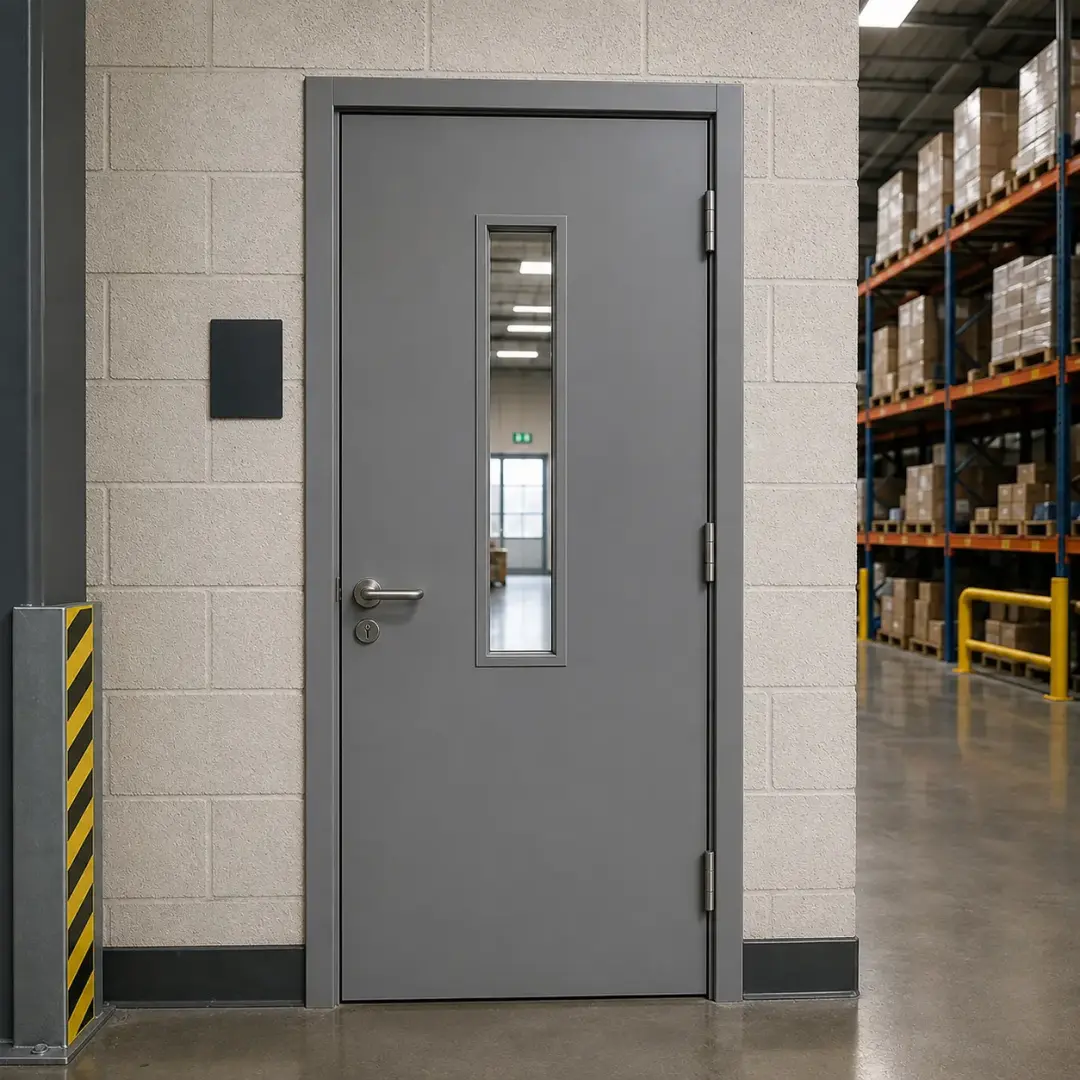
Multi-point locking secures the leaf at several positions, but bolt count alone does not prove resistance to attack. The receiving points, reinforcement and engagement matter together. Specify the cylinder and its protective hardware as a compatible arrangement, and ask how replacement keys are controlled.
Protect the hinge side and any glazing
Exposed hinges are normal on many outward-opening entrances. The question is how the complete design retains the closed leaf if the hinge side is attacked. Depending on the tested construction, hinge bolts or other interlocking features may provide additional protection.
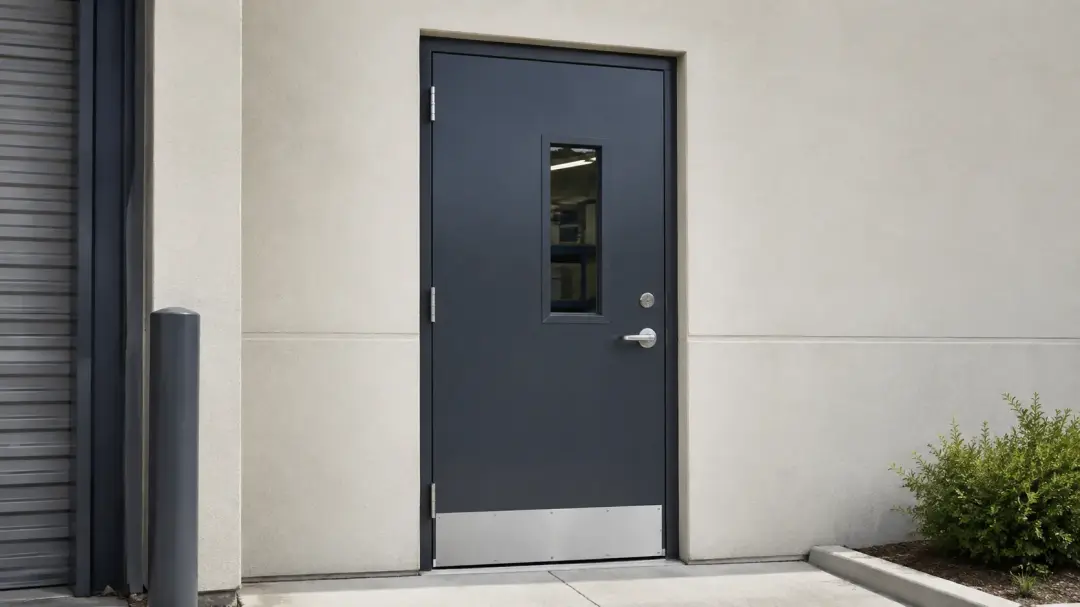
A vision panel becomes part of the security boundary. Request evidence covering the proposed glass, panel dimensions and retaining system. Certification for a solid leaf does not automatically cover a glazed alternative.
Louvers and other openings deserve the same scrutiny. Adding a ventilation opening after manufacture may affect the evidence supporting security or separately specified fire performance. Settle these details before ordering.
Ask for evidence for the actual doorset
Independent certification is more useful than terms such as heavy duty. LPCB lists LPS 1175 Issue 8.2 as a standard for intruder-resistant building components and related products. Check the product listing and certificate; steel construction does not itself establish certification. Source: LPCB security protection standards.
Confirm that the supplied size, opening direction, locks and glazing fall within the supported configuration. Evidence for one model is not evidence for every option in a manufacturer’s range. Agree any insurer requirements before accepting a quotation.
A security certificate has a defined scope. It does not make an entrance impossible to breach or establish its fire, acoustic and thermal performance. Obtain separate evidence where those properties are required.
Make controlled entry work in daily use
Electronic entry can give individual users separate credentials. Its value depends on administration: remove permissions when people leave, review who can enter and decide how visitors are admitted. A reader alone cannot prevent someone following an authorised user through the opening.
Door-position monitoring can flag an entrance left open. A correctly selected closer helps the leaf return and latch, but its operation needs checking under actual conditions, including wind pressure. A secure lock contributes little while a door is propped open.
Discuss electrical failure and emergency release with the access-system designer. One default arrangement does not suit every entrance. Security and escape requirements need to be resolved together.
Preserve escape operation and inspect after damage
Where an entrance also serves an escape route, its hardware must support that role. GOV.UK guidance calls for emergency doors that open easily and sufficient clear escape routes. A security rating does not replace a fire-risk assessment. Source: workplace evacuation planning.
Keep the doorset specification and installation details at handover. Check closure, latching and release, and arrange an assessment after attempted forced entry. Distortion around fixings can matter even when visible leaf damage appears minor.
Summary: assess the complete entrance
Security depends on compatible construction, protected hardware, suitable fixings and reliable everyday operation. Discuss your entrance in Shrewsbury with SteelFlex Door Company Ltd, including the evidence required for the intended level of protection.