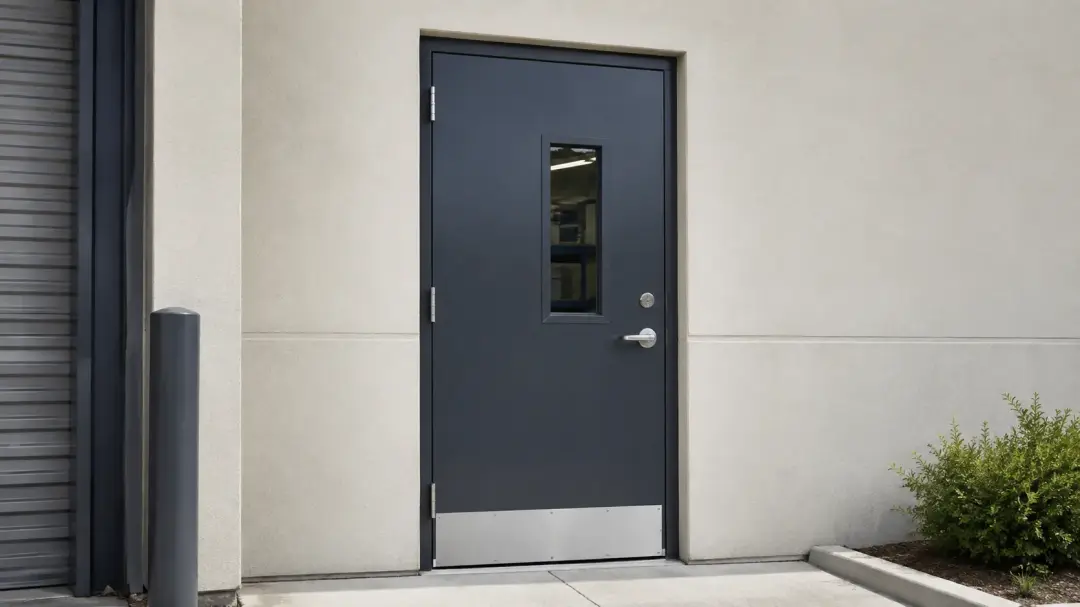
Why Are Steel Pedestrian Doors Used?
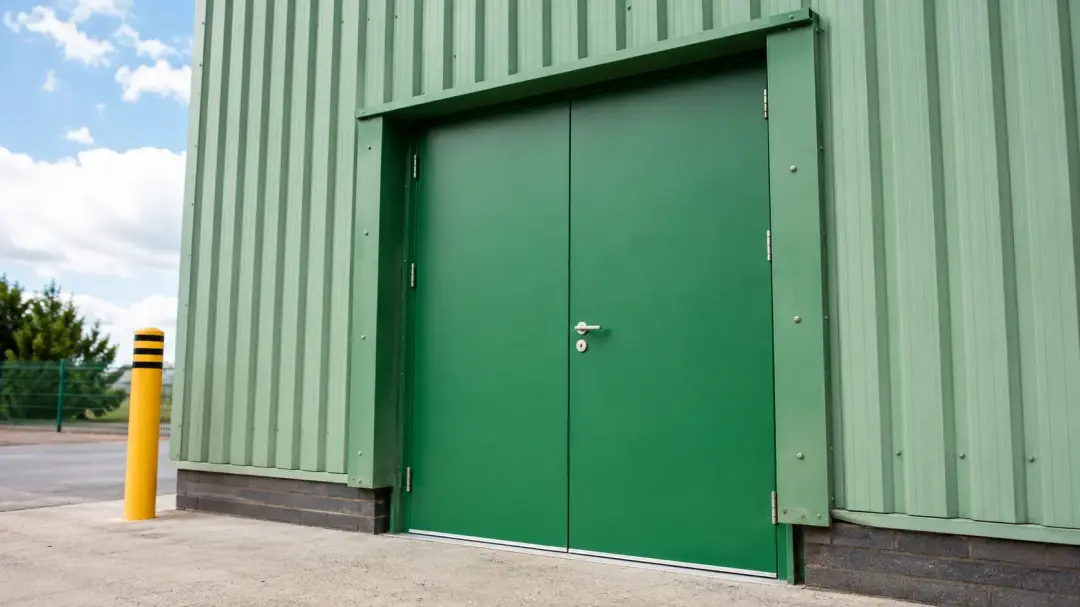
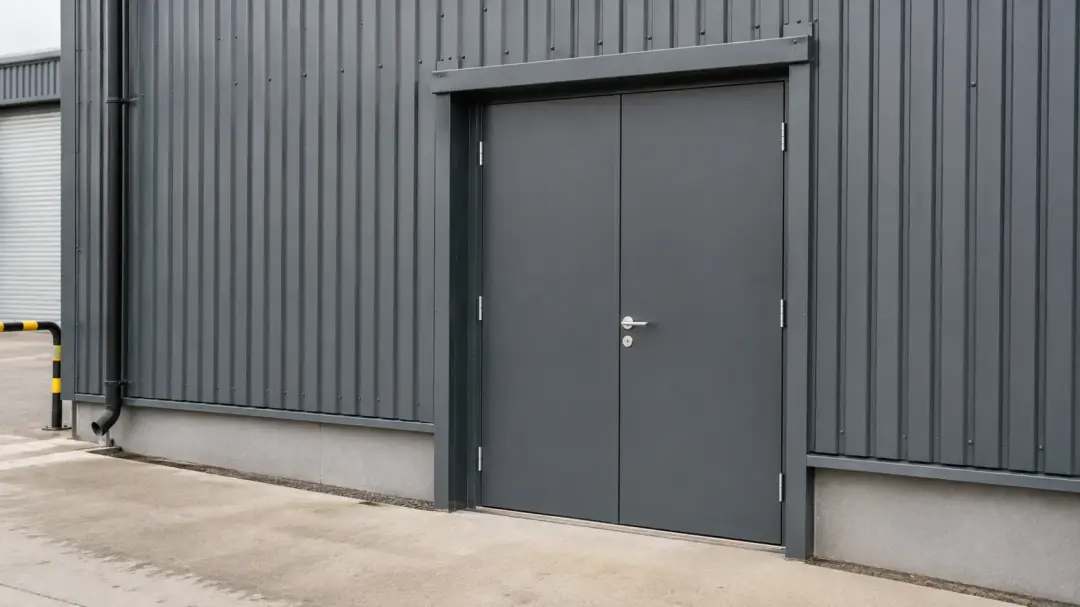
Steel pedestrian doors are commonly used because they provide a strong, durable and practical access solution for many types of property. Steel construction can withstand frequent use and is well suited to commercial and industrial environments where doors may experience heavy daily traffic. Security is another common reason for choosing steel.
Suitable locks, hinges and other hardware can be incorporated according to the level of protection required. Steel doors can also be specified for external locations where they need to withstand changing weather conditions. Different sizes, finishes and configurations allow them to suit a wide range of openings.
Depending on the specification, doors can include vision panels, access control equipment or panic hardware. This flexibility means the same basic type of door can be adapted for very different locations. Businesses can therefore choose a steel pedestrian door that balances everyday access, security, appearance and durability according to how the entrance will actually be used.
Steel Pedestrian Doors for Commercial Buildings
Commercial buildings commonly use steel pedestrian doors for staff entrances, service areas, rear access points and other locations where durability and security are important. These buildings can experience significant daily foot traffic, so doors need to withstand repeated opening and closing.
Steel doors can be installed in offices, retail developments, business units and mixed commercial properties. The required specification depends on the location. A public-facing entrance may need a suitable finish and vision panels, while a rear service door may place greater emphasis on security. Access control can also be incorporated where businesses need to restrict entry to employees or authorised visitors.
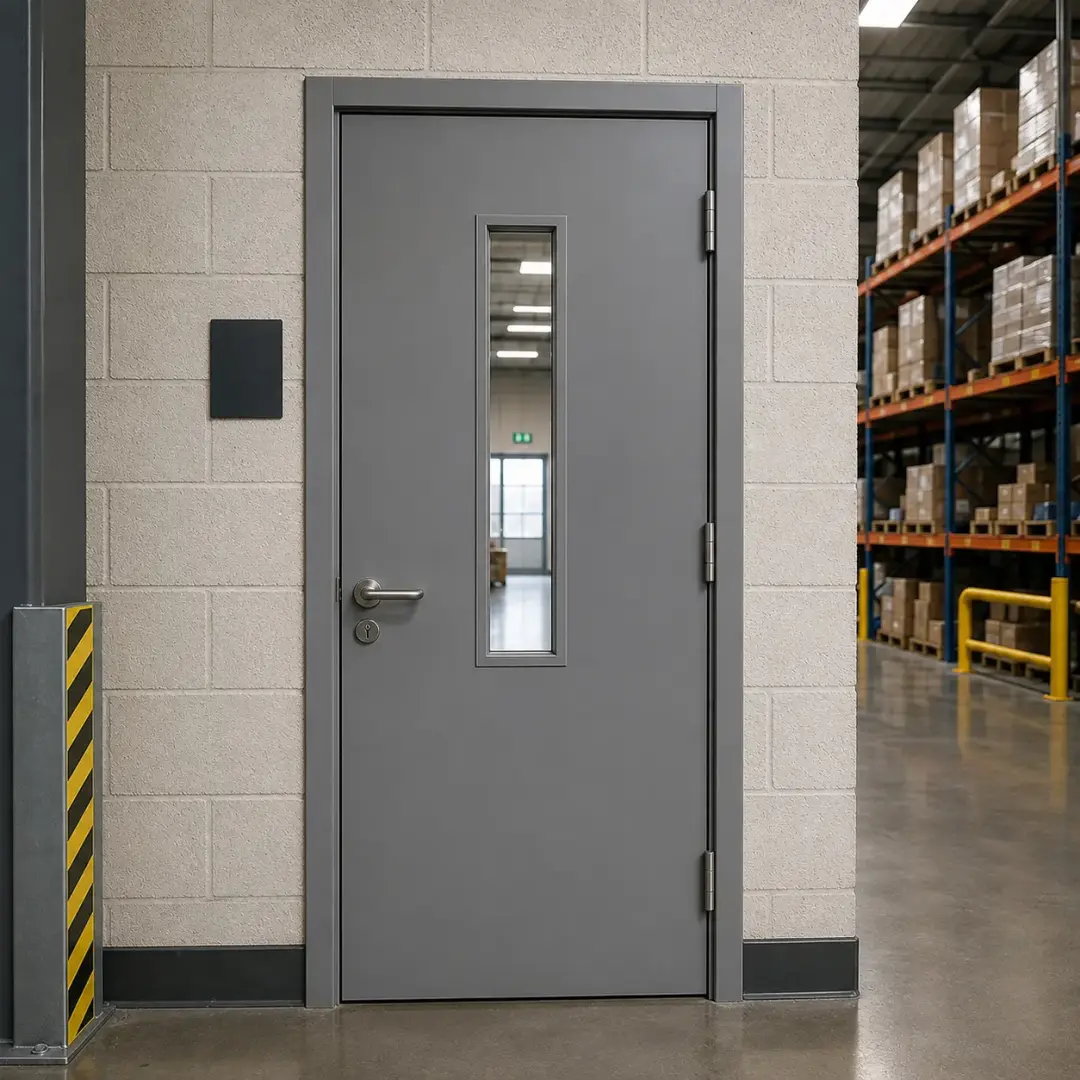
External doors should be selected according to their exposure to weather and the level of protection required.
Internal steel pedestrian doors can separate different working, storage or service areas.
Hardware should suit the expected level of traffic. Closers, handles, locks and hinges can all be selected according to how frequently the door will be used.
Where emergency escape requirements apply, suitable exit hardware may also be needed.
Steel pedestrian doors provide commercial buildings with a versatile solution that can be adapted to different entrances while maintaining a consistent level of strength and durability across the property.
Steel Pedestrian Doors for Industrial Buildings
Industrial buildings often require doors capable of handling demanding conditions and regular use. Steel pedestrian doors are commonly installed beside larger loading doors, between operational areas and at external staff entrances. Their strong construction makes them suitable for sites where doors may experience frequent contact, dirt and general workplace wear.
Security can also be important where equipment, materials or machinery are stored inside. Different locking and access control arrangements can be selected according to who should enter each area. Industrial buildings may require single or double pedestrian doors depending on the opening and volume of foot traffic.
External finishes can be chosen to suit the building and surrounding cladding. The door specification should also consider fire escape requirements, internal traffic and environmental conditions. Choosing a steel pedestrian door designed for the actual industrial setting can provide reliable everyday access while reducing the risk of premature damage from demanding site conditions.
Steel Pedestrian Doors for Warehouses
Warehouses often use steel pedestrian doors to provide safe and practical access for employees without requiring larger loading doors to be opened. This can be particularly useful around dispatch areas, storage buildings and external entrances.
A dedicated pedestrian door helps separate people from vehicle access points used by forklifts, vans and lorries. Steel construction is well suited to warehouse environments because doors can experience frequent daily use and occasional contact from equipment or transported goods.
Security is also important because warehouses may contain valuable stock. Appropriate locks and access control systems can therefore be incorporated.
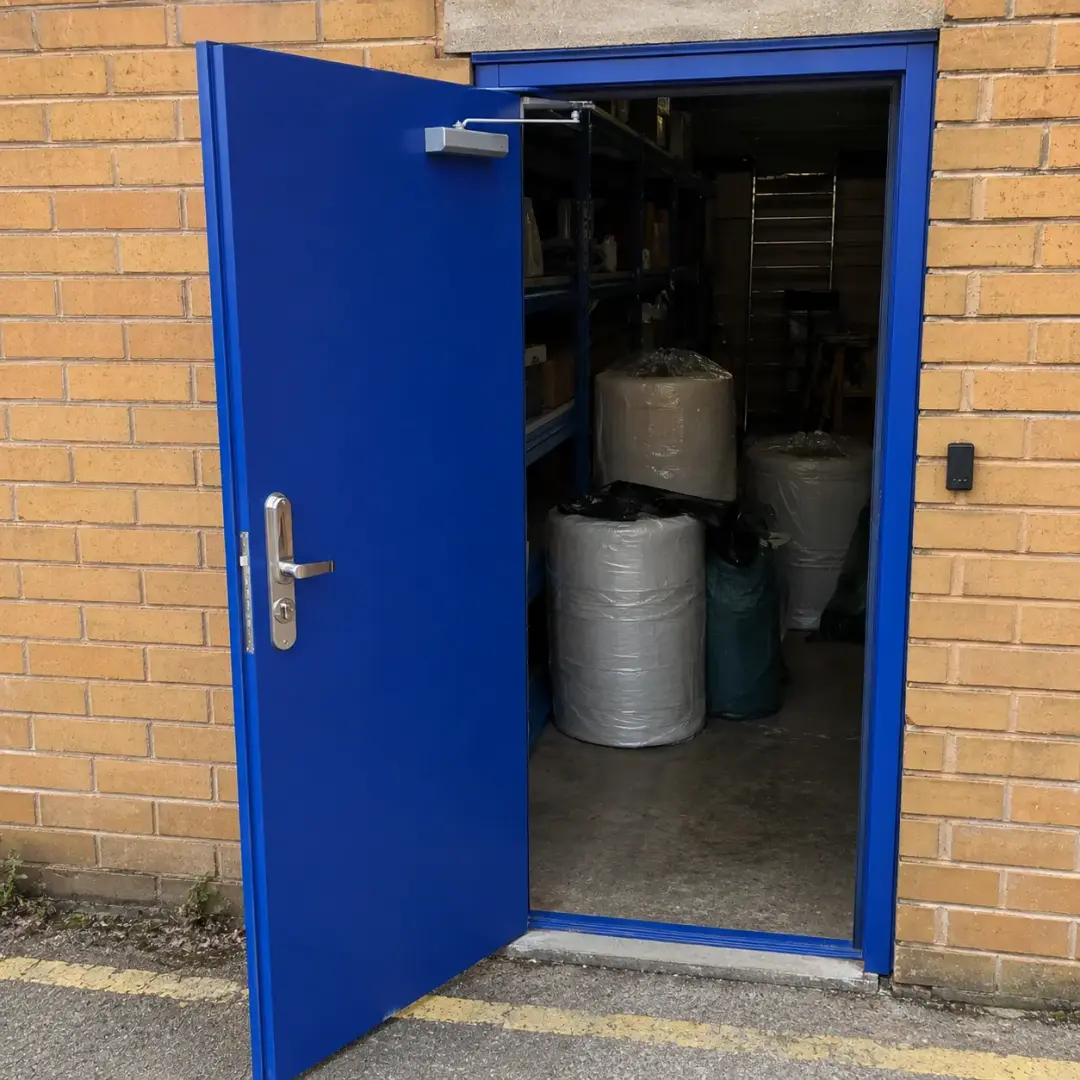
Doors may be installed beside roller shutters or loading bays to provide staff with a convenient alternative entrance. Internal pedestrian doors can also separate offices, storage rooms and operational sections. Vision panels may be useful where people need to see movement on the opposite side before opening the door.
Where the door forms part of an emergency route, suitable hardware and configuration should be selected for that purpose. External warehouse doors should also suit weather exposure and the surrounding building construction.
A properly specified steel pedestrian door provides warehouses with durable access that can support security, staff movement and the separation of pedestrian and vehicle routes.
Steel Pedestrian Doors for Factories
Factories commonly use steel pedestrian doors at entrances, production areas, plant rooms and service sections. The doors need to cope with regular use while supporting the security and organisation of different parts of the site. A strong steel construction is useful where doors may be exposed to demanding working conditions.
Access control can restrict entry to production or machinery areas where only trained employees should enter. Vision panels may be added where visibility between adjoining areas is helpful. External factory doors can provide staff access without requiring larger industrial doors to be opened. This can help maintain a more controlled entrance for pedestrians.
The finish and hardware can be selected according to the environment and expected level of use. Where fire escape routes pass through the opening, suitable emergency exit hardware may be required. Steel pedestrian doors can therefore be specified differently across the same factory to suit everyday entrances, secure sections and operational areas.
Steel Pedestrian Doors for Workshops
Workshops need practical entrances that can withstand regular movement of employees, tools and equipment. Steel pedestrian doors are a common choice because their robust construction suits working environments where lighter doors may become damaged more easily. They can be installed as main staff entrances, rear exits or internal doors between workshop and storage areas.
Workshops containing valuable machinery and tools may also require a stronger level of security when the premises are closed. Suitable locking arrangements can be selected according to the location and access requirements.
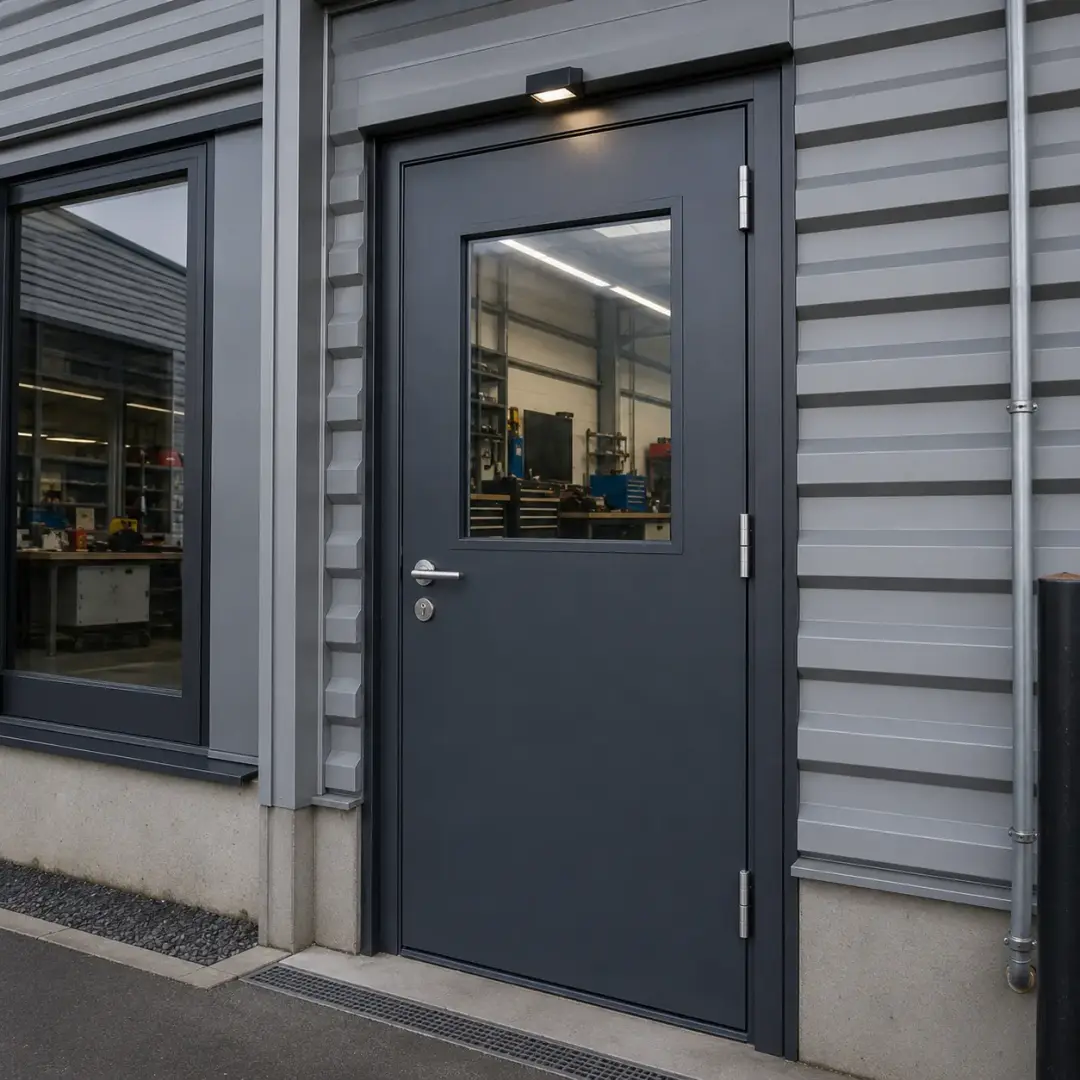
Where customers visit the workshop, the door finish can be chosen to provide a clean and professional appearance. Vision panels may be useful where the entrance opens into an active working area.
External doors should be suitable for local weather exposure, particularly where workshops are located on open industrial estates. Door closers can help prevent entrances being left open accidentally.
If employees frequently carry tools or materials through the doorway, the opening width and hardware should also reflect this. A correctly specified steel pedestrian door can provide workshops with reliable access while supporting security, durability and convenient movement between working and storage spaces.
Steel Pedestrian Doors for Schools and Colleges
Schools and colleges can use steel pedestrian doors for external entrances, service areas, plant rooms and restricted sections of the building. Durability is particularly important because doors may experience high levels of daily use.
Access control can help manage entry into staff-only or secure areas. Vision panels may be useful in busy corridors and entrances because they allow users to see whether someone is approaching from the opposite side. External doors can also be specified to suit playgrounds, sports areas and maintenance entrances.
Where doors form part of an emergency escape route, suitable exit hardware should be included. The finish can be selected to complement the wider building while retaining the benefits of steel construction.
Different parts of an educational site may require different specifications. A public entrance has different needs from a plant room or maintenance door. Professional door selection helps ensure the specification reflects traffic levels, location, security and the intended use of each opening.
Steel Pedestrian Doors for Hospitals and Healthcare Buildings
Hospitals and healthcare buildings contain many areas with different access requirements, making steel pedestrian doors suitable for a variety of locations. They can be installed at service entrances, plant rooms, storage areas, maintenance sections and restricted access points.
Durability is important because many healthcare buildings operate continuously and can experience heavy daily traffic. Some areas need controlled entry so only authorised staff can gain access. Steel doors can be combined with suitable locking or access control equipment for these locations. Vision panels may help where staff need visibility through frequently used doors.
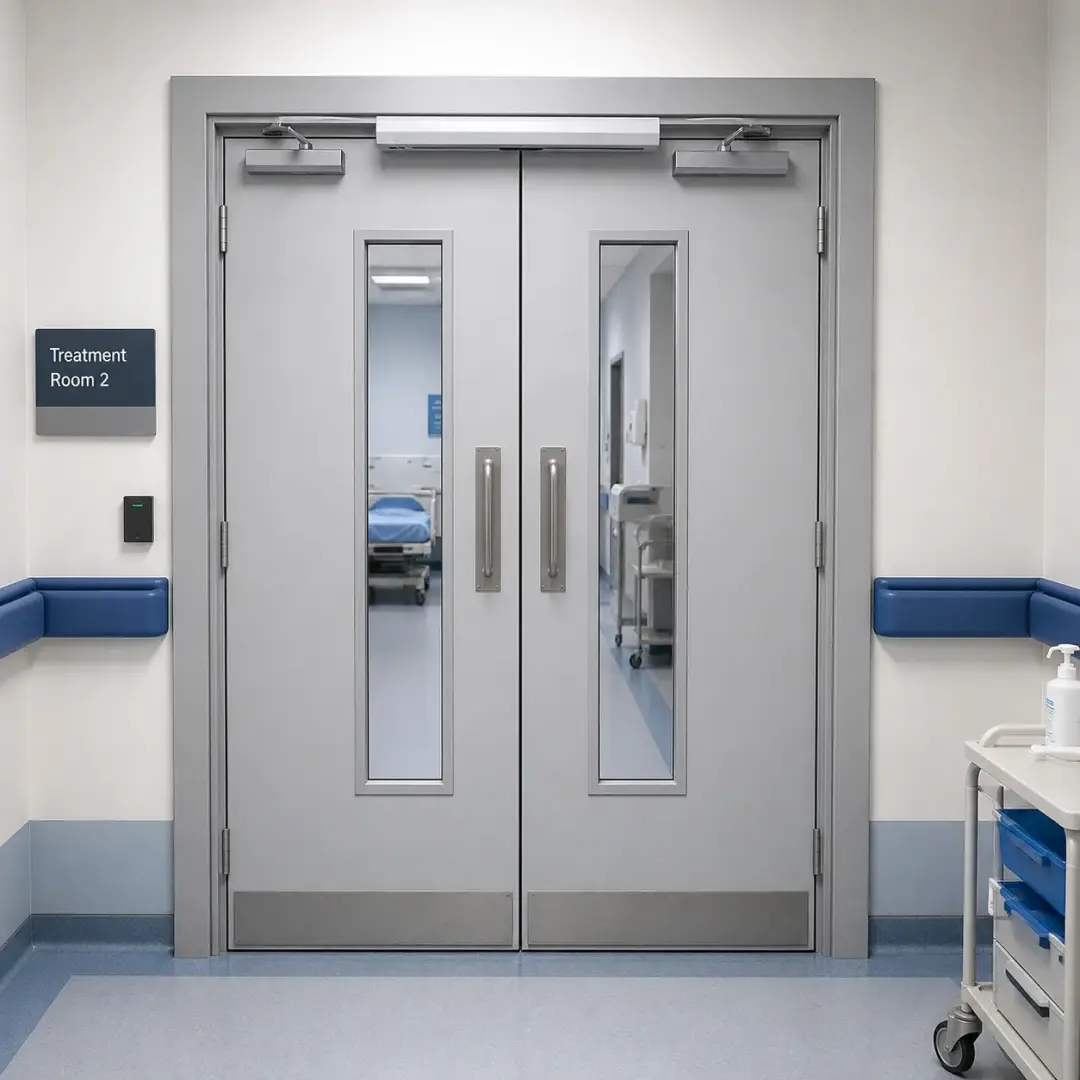
The opening width and hardware should reflect how the area is used, particularly where equipment or trolleys need to pass through. External doors can provide secure access to service yards and maintenance areas.
Plant and utility rooms may require stronger restricted-access doors because important building systems are housed inside.
Where a door forms part of an escape route, the hardware and operation should suit that purpose.
Healthcare premises can be complex, so the door specification should be selected for each individual location rather than applying the same arrangement throughout. Steel pedestrian doors provide a strong and adaptable option for areas where reliable access, durability and controlled entry are important.
Steel Pedestrian Doors for Offices
Office buildings can use steel pedestrian doors for external entrances, staff access, plant rooms and service areas. The required design depends on whether the door is public-facing or located in a more functional part of the building. Rear and side entrances often benefit from the strength and security of steel construction.
Access control can be added where only employees should enter. Internal steel doors may also separate storage, maintenance and utility spaces from normal office areas. A suitable finish can help the door coordinate with the appearance of the property. Vision panels and door closers can be incorporated where appropriate.
Busy office buildings may require hardware designed for frequent opening and closing. External doors should also be selected according to weather exposure and security requirements. Using steel pedestrian doors in suitable locations can provide reliable access while helping businesses protect areas that do not require a conventional glazed or decorative office entrance.
Steel Pedestrian Doors for Retail Properties
Retail properties can use steel pedestrian doors at rear entrances, stockrooms, delivery areas and staff-only access points. These locations often require a more robust and secure door than the customer-facing entrance at the front of the premises.
Shops may receive frequent deliveries through rear or side areas, meaning doors can experience regular contact from stock cages, boxes and handling equipment. Steel construction helps provide additional durability for these demanding access points.
Security is also an important consideration because stock may be stored immediately behind the door. Suitable locking systems and access control equipment can be fitted according to the retailer's requirements.
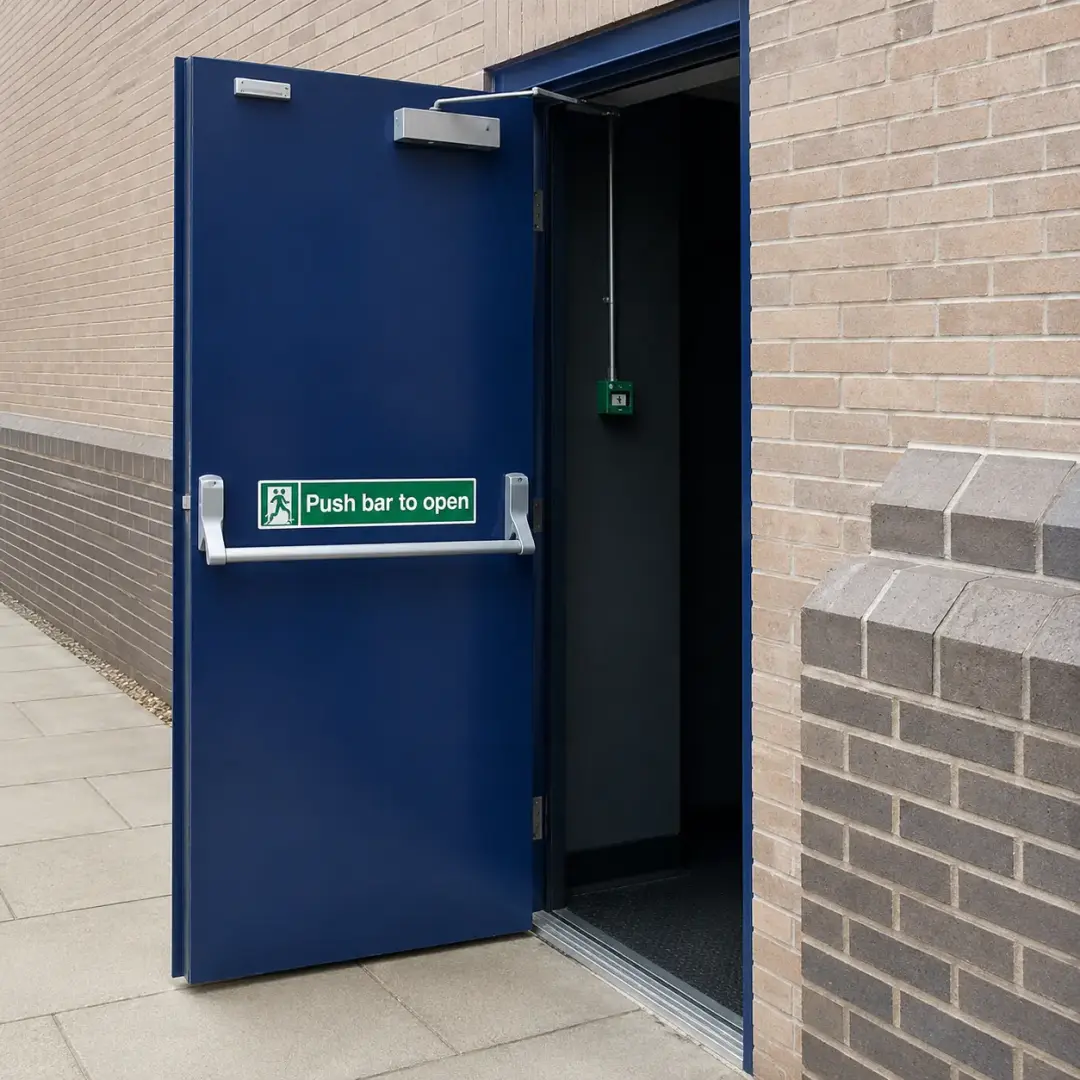
Internal steel doors may separate sales areas from stockrooms or service spaces. Vision panels can improve visibility where employees regularly move goods through the opening.
Door closers may help prevent secure entrances being left open accidentally. Larger retail units and shopping developments may also use steel pedestrian doors in loading bays, plant rooms and waste storage areas.
The finish can be chosen to suit either a practical service environment or a more visible location. Selecting the correct steel pedestrian door helps retail businesses maintain secure staff and delivery access while providing a durable entrance capable of handling frequent commercial use.
Steel Pedestrian Doors for Plant Rooms
Plant rooms contain important mechanical, electrical and building service equipment, so access often needs to be restricted. Steel pedestrian doors provide a strong entrance that can be fitted with suitable locking arrangements. The door may be located internally or externally depending on the building layout.
External plant room doors should be selected for weather exposure as well as security. Ventilation requirements may also influence the door specification in certain plant areas. Access needs to remain practical for engineers carrying tools and replacement components. The opening size should therefore suit normal maintenance work.
Clear identification can help prevent unauthorised people entering the room. Where particular fire or building requirements apply, the door specification should reflect them. Steel construction is well suited to these functional areas because appearance is often less important than durability and controlled access. A properly specified plant room door helps protect essential equipment while allowing authorised maintenance personnel convenient entry.
Steel Pedestrian Doors for Service Areas
Service areas frequently use steel pedestrian doors because they need robust entrances that can withstand regular staff access, deliveries and general commercial activity. These locations are often positioned behind or beside the main customer-facing parts of a building.
Service doors can provide access to maintenance corridors, delivery zones, storage areas and back-of-house rooms. Steel construction helps protect the opening from everyday knocks and wear caused by moving goods or equipment.
Security is important because service entrances may be less visible than main entrances. Suitable locks or access control can therefore be incorporated.
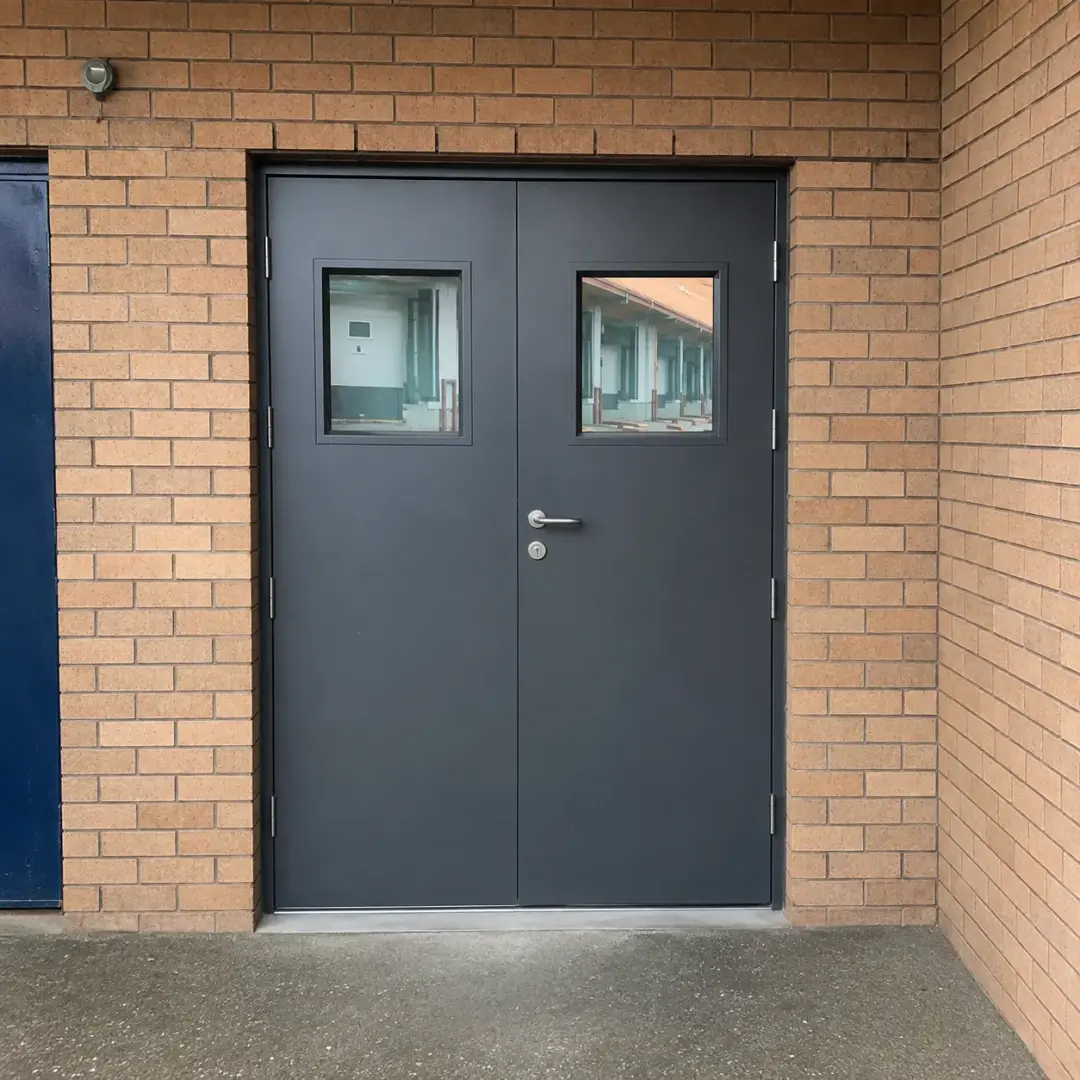
The door can also include a closer to prevent it being left open accidentally. Vision panels may be useful where workers regularly approach the doorway from both directions.
External service entrances should be weather resistant and suited to the surrounding wall or cladding system. Internal doors may have different requirements depending on what areas they separate.
Where a service door is also used as an emergency exit, the hardware should support safe escape. Businesses should consider who uses the door, how frequently it opens and what equipment passes through it. A suitable steel pedestrian door can provide a reliable service entrance that remains secure while handling the demands of regular commercial or industrial use.
Steel Pedestrian Doors for Storage Areas
Storage areas can benefit from steel pedestrian doors where security and durability are important. They may contain stock, equipment, tools or documents that should not be freely accessible. Steel doors can be fitted with suitable locks or access control equipment to restrict entry.
The level of security can be selected according to the value and sensitivity of the stored contents. Internal storage rooms may require a straightforward single door, while larger areas can need double doors for moving bulky items.
Vision panels can be included where visibility is useful. External storage areas need doors suited to weather exposure and frequent use. The opening should also be wide enough for normal stock movement.
Where trolleys or handling equipment regularly pass through, durable hardware can help the door withstand repeated contact. Selecting the right specification provides convenient authorised access while helping protect the contents of the storage area.
Steel Pedestrian Doors for Bin Stores
Bin stores are frequently located outside or within service areas where doors are exposed to regular use, impacts and changing weather conditions. Steel pedestrian doors are well suited to these environments because they provide a strong and practical entrance.
The door may be opened repeatedly by staff, cleaners and waste collection teams. Durable construction helps it withstand contact from bins and other equipment moving through the opening.
Ventilation may be required depending on the design of the bin store, and this can influence the door specification. Security is another consideration. Locking the area can prevent unauthorised access and reduce the likelihood of unwanted waste being left inside.
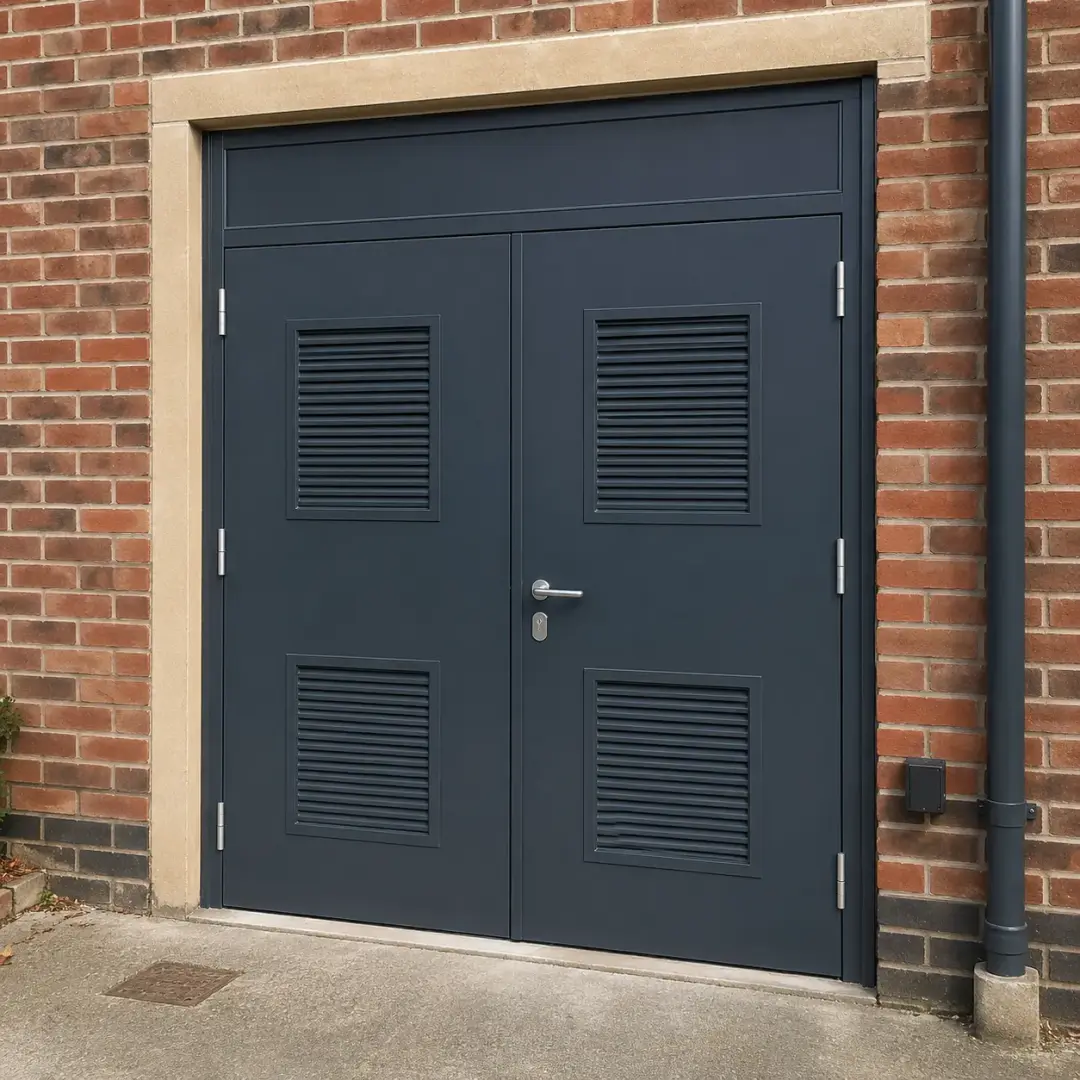
The door should be wide enough for the bins used at the site. Double steel doors may be appropriate where larger commercial waste containers need to pass through.
External finishes should suit prolonged exposure to rain and general outdoor conditions. Ease of cleaning can also be useful in waste storage environments.
The locking arrangement should remain practical for authorised staff and collection personnel.
Steel pedestrian doors provide bin stores with an effective combination of strength, access and security, particularly where lighter doors could become damaged through frequent contact with heavy waste containers.
Steel Pedestrian Doors for Utility Buildings
Utility buildings often contain electrical, water, heating or communications equipment that needs protection from unauthorised access. Steel pedestrian doors provide a secure and durable entrance for these functional buildings. They can be specified for standalone structures or utility rooms forming part of a larger property.
The door should allow convenient access for engineers while remaining locked at other times. External utility doors must also cope with weather exposure. Suitable finishes and hardware can be selected according to the site environment.
Ventilation may be needed for certain equipment and should be considered within the overall specification. Some utility buildings are located in exposed or isolated areas, making security especially important.
The opening size should allow maintenance equipment to pass through when necessary. A correctly specified steel pedestrian door helps keep valuable infrastructure protected while ensuring authorised personnel can reach the equipment efficiently for inspections, maintenance and repair work.
Steel Pedestrian Doors for Car Parks
Car parks can use steel pedestrian doors for entrances to stairwells, service rooms, plant areas and restricted sections. These locations often experience demanding conditions and substantial daily foot traffic. A steel door provides a durable solution where the entrance may be exposed to weather, moisture or regular contact.
Multi-storey car parks may use pedestrian doors to separate parking levels from staircases or internal building access. Visibility can be useful in some locations, so vision panels may be included where appropriate. Security should also be considered. Restricted plant rooms and service areas may require stronger locking arrangements than general pedestrian routes. External or partially exposed doors need suitable finishes for the environment.
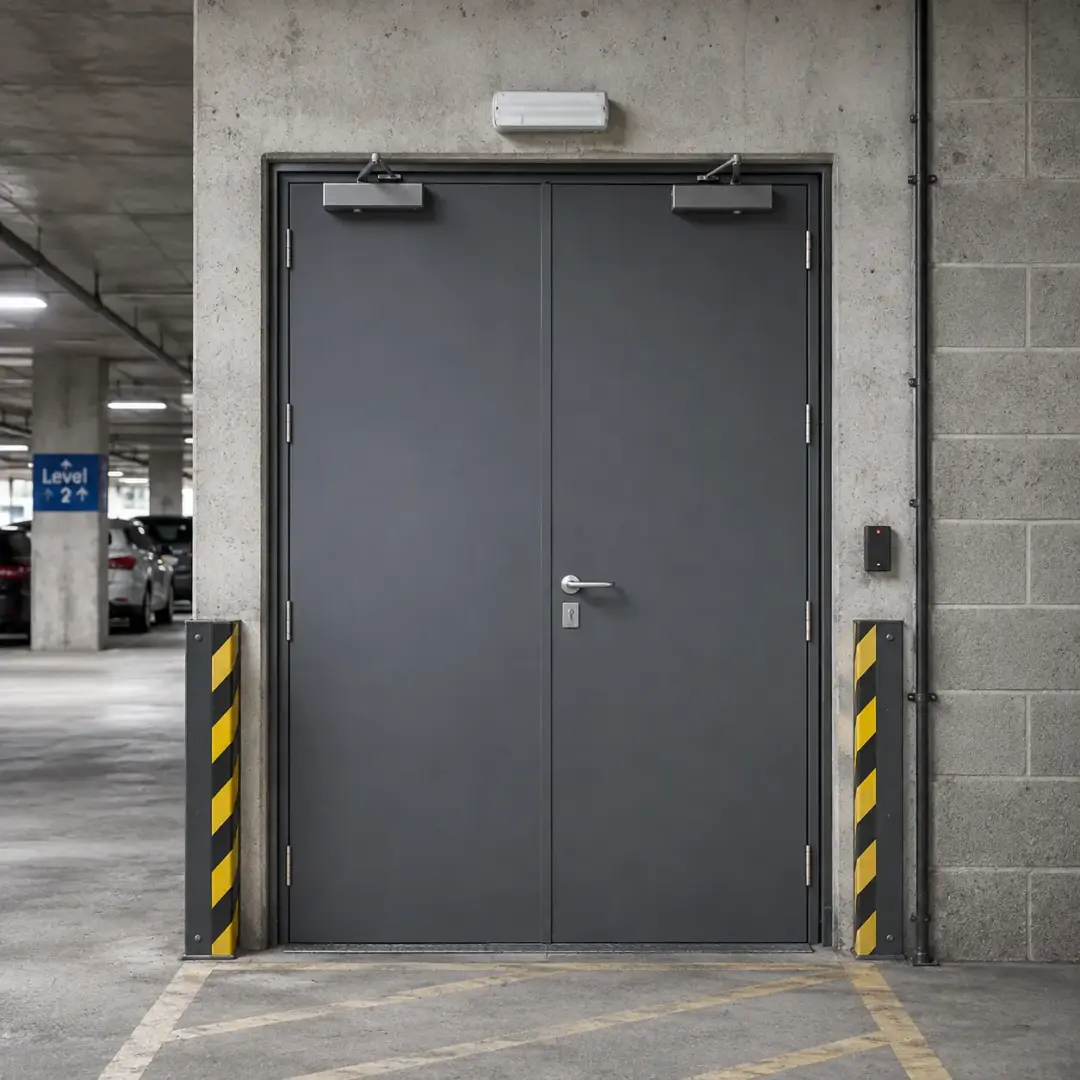
Hardware should reflect the volume of daily use. Closers can help ensure doors return to the closed position, while access control can restrict entry to designated users.
Where the opening forms part of an emergency escape route, the door must be specified accordingly. Car parks also contain moving vehicles, so pedestrian routes should be clearly organised.
Steel pedestrian doors can support this separation by providing dedicated access points away from vehicle entrances.
Choosing the correct door configuration helps create durable and practical pedestrian access throughout parking facilities.
Steel Pedestrian Doors for Apartment Blocks
Apartment blocks can use steel pedestrian doors in communal service areas, bin stores, plant rooms, car parks and restricted entrances. These parts of the building often require durable doors that can cope with frequent use.
Security is particularly important where the door provides access from an external or shared area. Suitable locks or access control systems can be incorporated.
The appearance of more visible doors can also be considered through different finishes and colours. Internal service doors may prioritise durability and controlled access. Bin stores and plant rooms can require different specifications from communal pedestrian entrances.
Where doors form part of escape routes, appropriate exit hardware may be needed. Apartment developments can contain several types of steel pedestrian door across one property. Selecting each door according to its actual location helps provide practical access without using an unnecessarily complex specification everywhere. Professional supply can ensure size, hardware, security and finish all suit the individual opening.
Steel Pedestrian Doors for Public Buildings
Public buildings can experience high levels of daily foot traffic, making durable pedestrian access important. Steel doors can be used at service entrances, staff-only areas, maintenance rooms and other parts of the property where robust construction is useful.
Examples can include council buildings, community centres, libraries and other publicly accessed premises. The door specification should reflect whether the entrance is available to everyone or restricted to authorised employees. Public-facing areas may benefit from vision panels and a carefully selected finish.
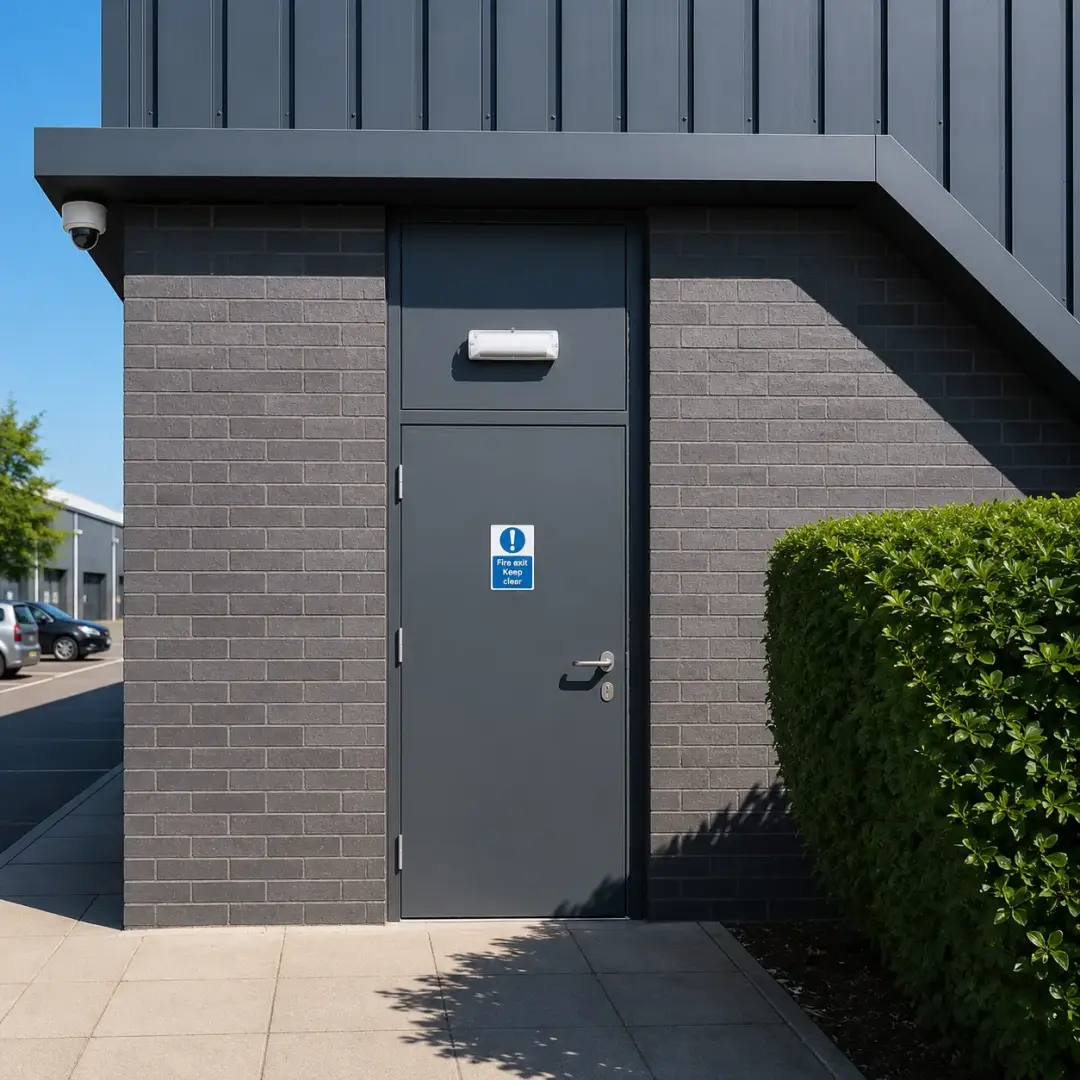
Service and plant room doors may place more emphasis on security. High levels of use mean hinges, handles and closers should be suitable for repeated daily operation. Accessibility and convenient movement should also be considered when choosing the door configuration.
External doors need to withstand local weather conditions and remain reliable throughout regular use. Where doors form part of emergency escape routes, suitable exit hardware should be incorporated. Access control systems can help manage entry into staff or restricted areas without preventing authorised users moving efficiently through the building.
A professional steel door supplier can help match each opening to the appropriate specification. This allows public buildings to combine durability, security and practical pedestrian movement across both public and behind-the-scenes areas.
We supply and fit robust steel pedestrian doors to businesses and public premises across Shrewsbury, Bridgnorth and Telford, ensuring every doorway combines uncompromising security, professional appearance and long-term reliability in daily use.